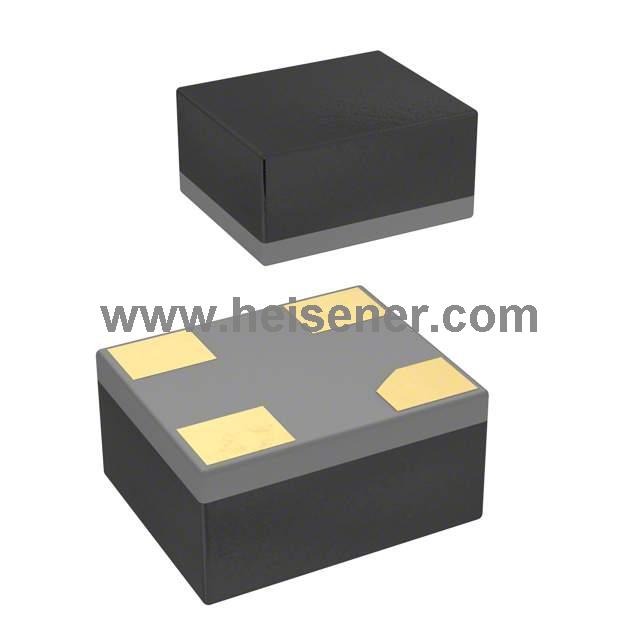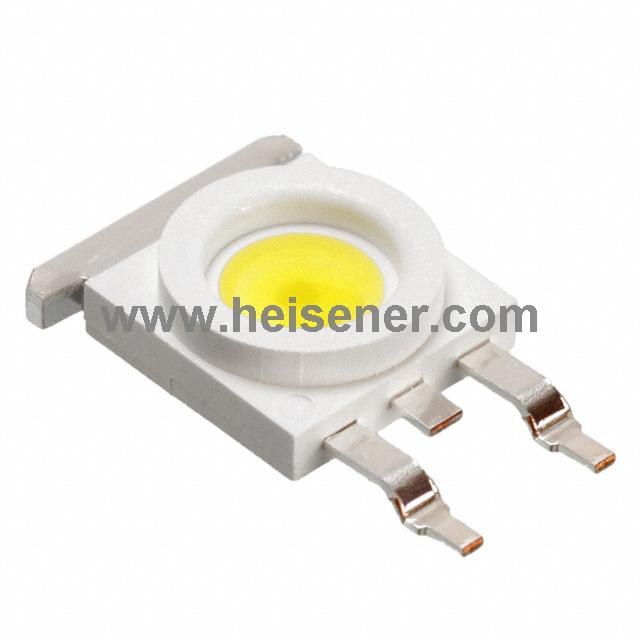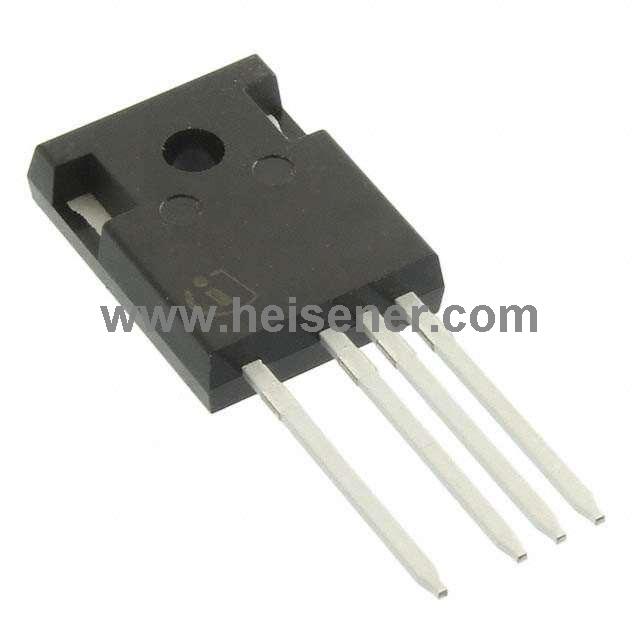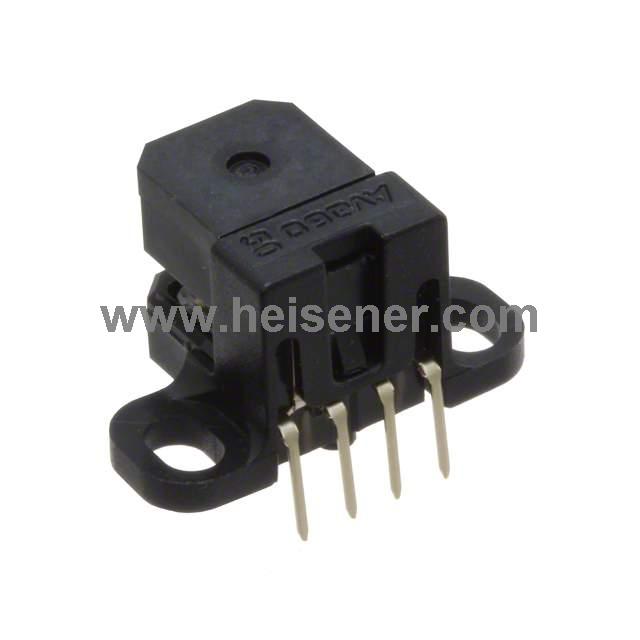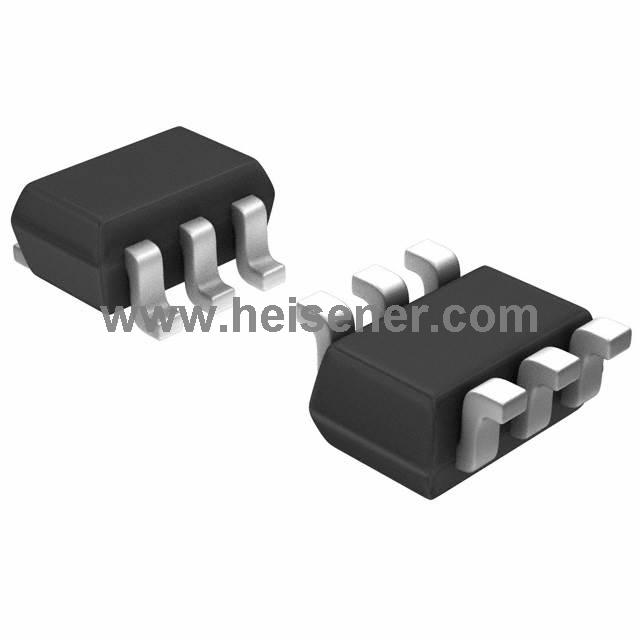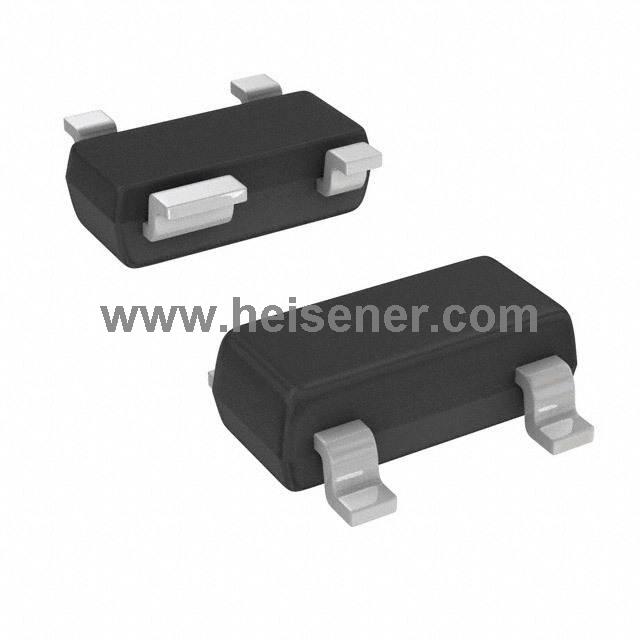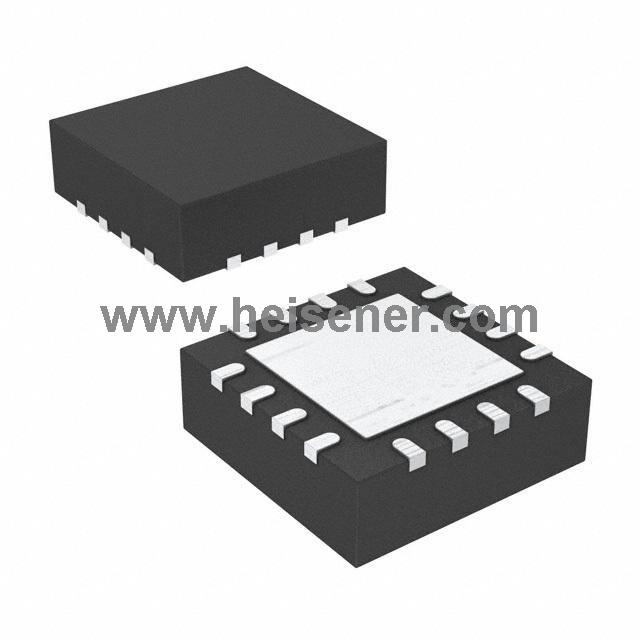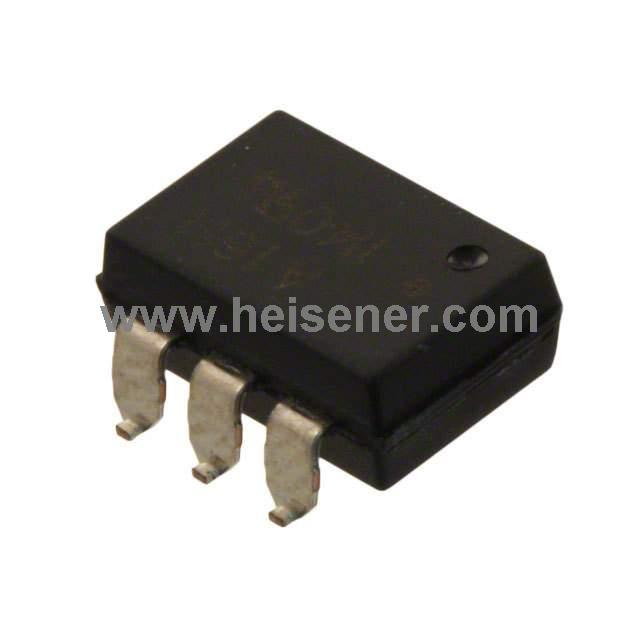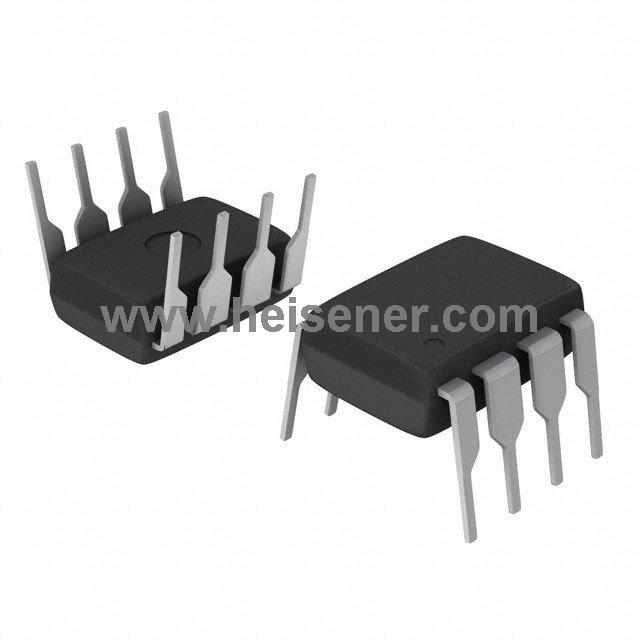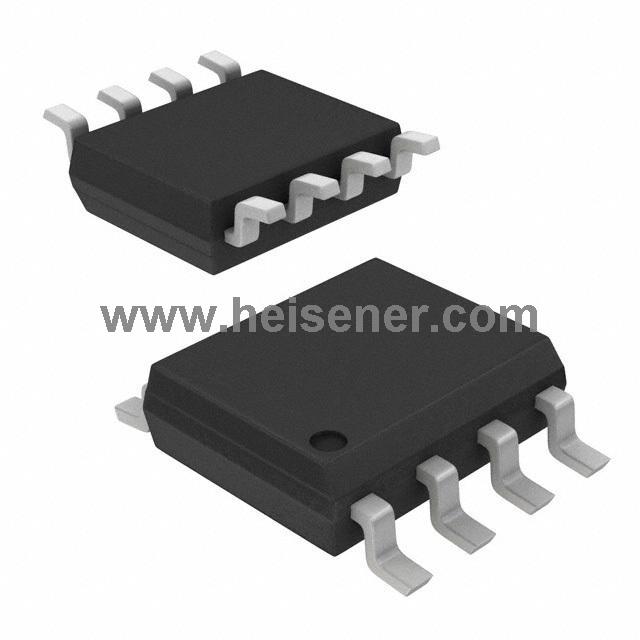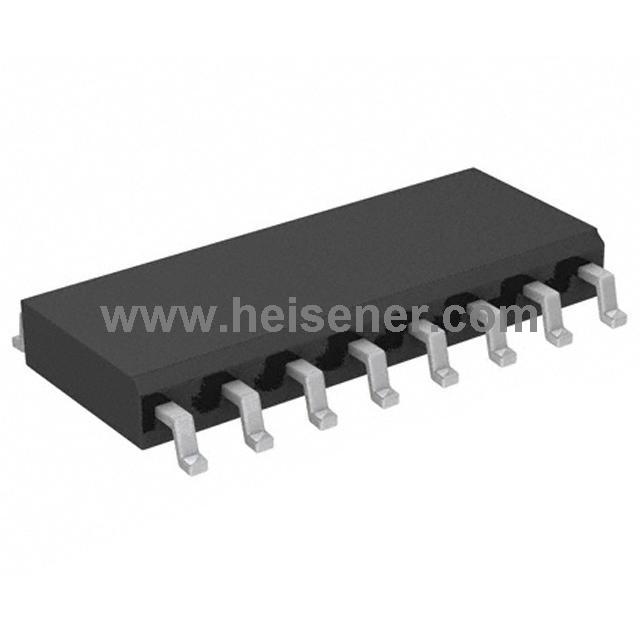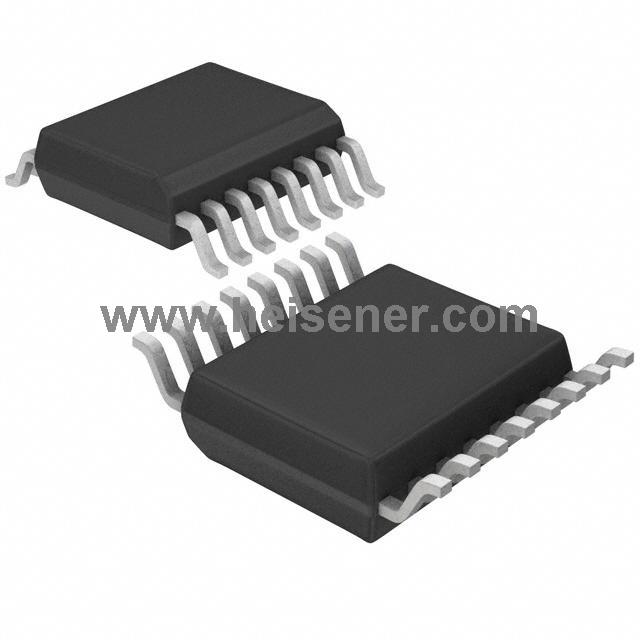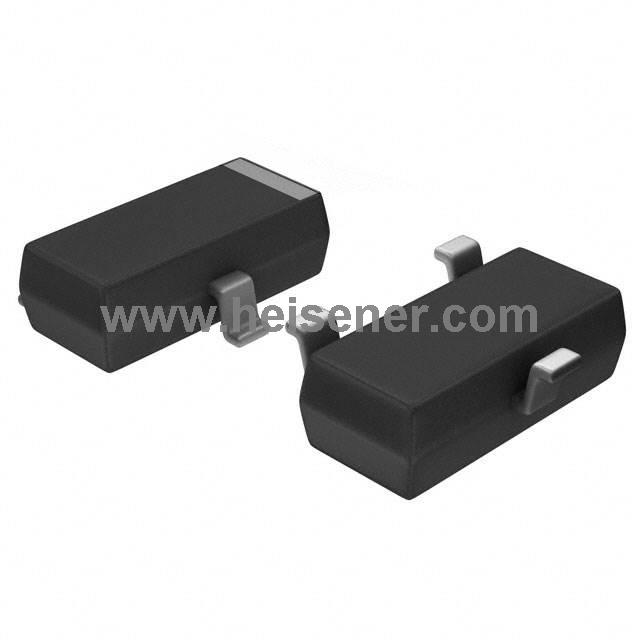
A diode is an electronic device made from semiconductor materials such as silicon, selenium, or germanium. It is one of the earliest semiconductor devices and remains widely used today. In various electronic circuits, diodes are combined with resistors, capacitors, inductors, and other components to perform functions such as AC rectification, signal detection, clipping, clamping, and voltage regulation.
Diodes can be found in a wide range of applications, including simple radio circuits, household appliances, industrial control systems, and more.
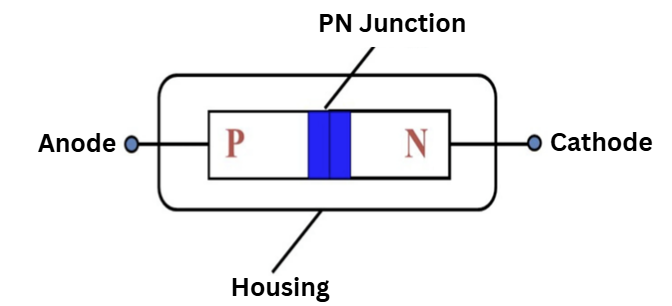
A diode consists of a PN junction, electrode leads, and a protective package. Through different doping processes and diffusion techniques, P-type and N-type semiconductors are formed on the same semiconductor substrate (typically silicon or germanium). At the interface between the two regions, a space-charge region, known as the PN junction, is created.
The electrode connected to the P-region is called the anode, while the electrode connected to the N-region is called the cathode. Due to the unidirectional conductivity of the PN junction, when the diode is forward-biased, current flows internally from the anode to the cathode.

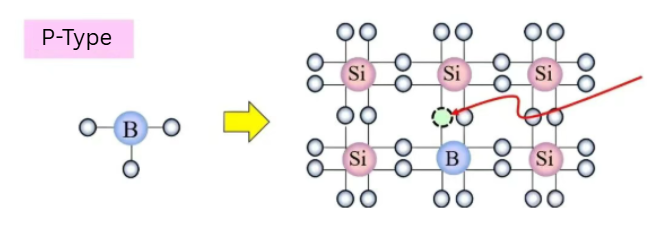
A P-type semiconductor is formed by doping an intrinsic semiconductor with a small amount of trivalent impurities (such as boron). This creates a large number of holes, making it a hole-type semiconductor. In a P-type semiconductor, holes are the majority carriers, while electrons are the minority carriers.
An N-type semiconductor is formed by doping an intrinsic semiconductor with a small amount of pentavalent impurities (such as phosphorus). This creates a large number of free electrons, making it an electron-type semiconductor. In an N-type semiconductor, electrons are the majority carriers, while holes are the minority carriers.
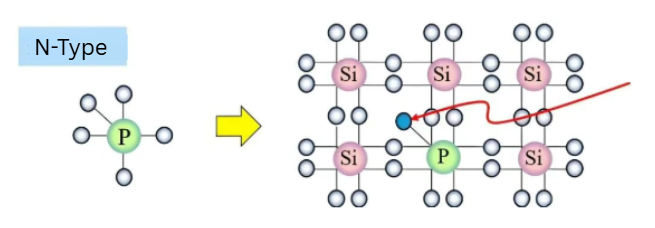
A PN junction is formed by combining the two types of semiconductors described above, as shown in the figure below:
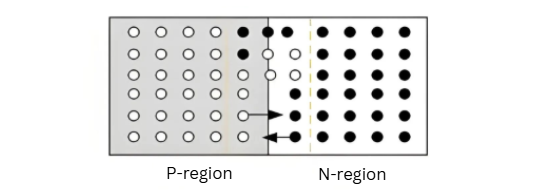
Particles naturally diffuse from regions of high concentration to low concentration. In a PN junction, holes in the P-region diffuse toward the N-region, while electrons in the N-region diffuse toward the P-region due to the concentration gradient. As this diffusion occurs, a built-in electric field is formed at the junction, eventually balancing the concentration gradient and establishing equilibrium.
The most important electrical property of a diode is its unidirectional conductivity, meaning current flows easily from the anode to the cathode, but is difficult to flow in the reverse direction. From the voltage-current (V-I) characteristic curve, a diode mainly operates in three regions: forward conduction, reverse cutoff, and reverse breakdown.
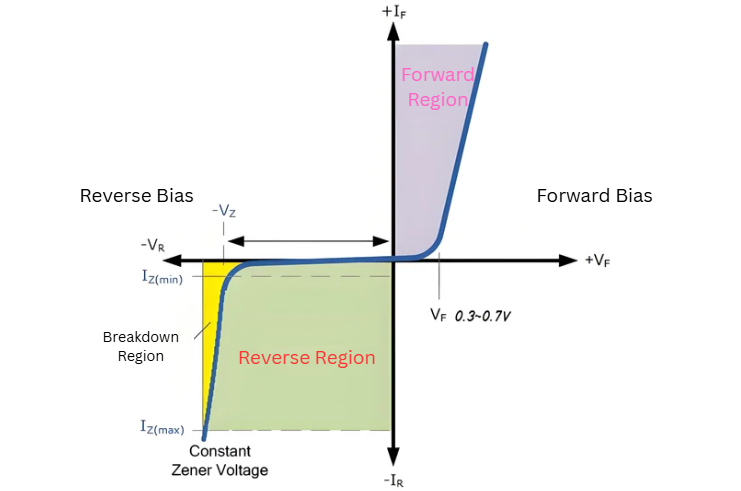
When a forward voltage is applied across a diode, the P-region is connected to the positive terminal and the N-region to the negative terminal. The external electric field weakens the built-in electric field of the PN junction. At first, because the applied voltage is too small, it is not sufficient to overcome the junction barrier, so the current through the diode is nearly zero. This region is known as the cutoff region (or dead zone).
As the forward voltage increases and reaches a certain level, the PN junction barrier is effectively reduced, allowing a large number of charge carriers to cross the junction. The diode then rapidly enters the conduction state, and the current increases sharply with voltage. The voltage at which the diode begins to conduct significantly is called the threshold voltage (cut-in voltage). At room temperature, this value is typically about 0.7V for silicon diodes and 0.3V for germanium diodes. In the conduction region, the voltage across the diode changes very little while the current varies significantly, showing a clear nonlinear behavior.
When a reverse voltage is applied across the diode, the P-region is connected to the negative terminal and the N-region to the positive terminal. The external electric field aligns with the built-in field, further increasing the potential barrier of the PN junction, preventing most charge carriers from crossing the junction.
Only a very small number of minority carriers generate a tiny reverse current under the electric field. This current is called reverse saturation current or leakage current. When the reverse voltage is below the breakdown voltage, this current is extremely small and almost independent of the applied voltage, so the diode is essentially in the cutoff state. This is the key reason why a diode exhibits unidirectional conduction.
It should be noted that reverse leakage current is strongly temperature-dependent and typically increases significantly as temperature rises.
When the reverse voltage continues to increase and exceeds a certain critical value, strong carrier multiplication occurs inside the PN junction, causing a sudden sharp increase in reverse current. This phenomenon is known as reverse breakdown, and the corresponding voltage is called the reverse breakdown voltage.
After breakdown occurs, the diode temporarily loses its normal unidirectional conduction capability. If the current is properly limited and the device does not overheat, some diodes may recover after the applied voltage is removed. However, if the breakdown current is too large and causes a rapid rise in junction temperature, permanent damage may occur. Therefore, in practical circuit design, the reverse voltage applied to a diode must not exceed its rated breakdown voltage.
Based on differences in working principles and application scenarios, diodes can be further classified into several types. Understanding their operating principles and typical applications helps achieve more accurate component selection and circuit/system design.
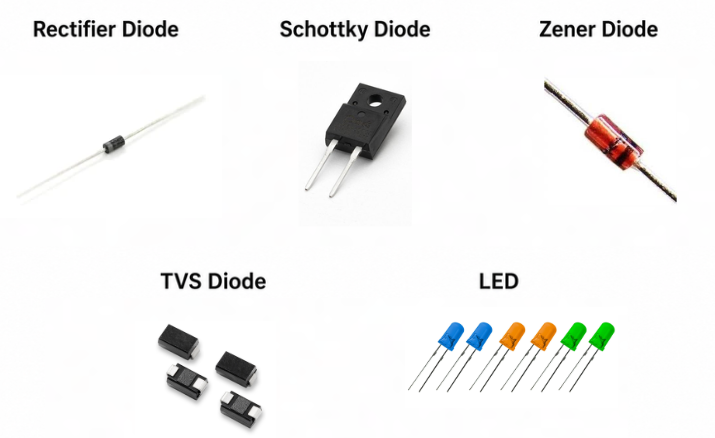
Based on the unidirectional conductivity of a diode, when an AC signal passes through it, the diode allows the current during the positive half-cycle to pass while blocking the negative half-cycle. This process is called rectification, and the diodes used for this function are called rectifier diodes.
Applications:
- Household power adapters
- Charger rectifier circuits
- Power-frequency transformer step-down rectification, full-bridge / half-bridge rectifier circuits
- Industrial low-voltage DC power modules
A Schottky diode, also known as a hot-carrier diode, is a semiconductor diode characterized by a low forward voltage drop and very fast switching speed. When current flows through a Schottky diode, a small voltage drop appears across its terminals. Its main advantages are lower conduction loss and faster switching performance.
Applications:
- Secondary rectification in switching power supplies, synchronous rectification circuits
- Lithium battery reverse protection and anti-backflow circuits
- High-current low-voltage output circuits
- Fast-charging power modules
A Zener diode operates in the reverse breakdown region, using the characteristic that voltage remains relatively constant despite changes in current. It is commonly used in voltage regulation and protection circuits. Unlike ordinary diodes, which operate in forward bias, Zener diodes are used in reverse bias. The reverse breakdown voltage is called the Zener voltage, and the corresponding current is the Zener current.
Applications:
- Voltage reference and regulation sampling circuits
- I/O over-voltage protection and voltage clamping
- Low-voltage auxiliary power regulation
A TVS diode is a special avalanche diode used to protect ICs from transient overvoltage and surge events caused by electrostatic discharge (ESD) or power fluctuations. Unlike rectifier and Schottky diodes, which rely on forward conduction, TVS diodes—like Zener diodes—operate based on reverse characteristics.
Applications:
- Communication interfaces
- Power input protection
- Industrial equipment surge and ESD protection
A light-emitting diode is formed by encapsulating a PN junction in a transparent material, allowing it to emit light when current passes through. Different semiconductor materials produce different colors of light. LEDs are widely used in daily applications.
When used as indicator lights, LEDs are driven with a series current-limiting resistor. When used for lighting applications, they are typically driven by a constant current source.
Applications:
- Equipment indicator lights
- Status indication
- Backlighting and illumination circuits
Semiconductor diodes are used in almost all electronic circuits. They help protect circuits and extend their service life. The development of diodes has also improved the performance of integrated circuits and plays a positive role across various fields. Diodes serve many functions in ICs and help maintain normal circuit operation. The following briefly introduces their roles in four types of circuits:
Switching circuits
In digital and integrated circuits, the unidirectional conductivity of diodes is used to control circuit ON/OFF states, and this technique is widely applied. Switching diodes can effectively protect circuits from damage caused by short circuits and also perform traditional switching functions. Another key advantage is their very fast switching speed, which cannot be matched by mechanical switches.
Clipping circuits
In electronic circuits, clipping circuits are commonly used for signal processing. They selectively limit signals within a preset voltage range, allowing only part of the signal to pass. Most diodes can be used for clipping, while dedicated clamping diodes are sometimes required for protection in precision instruments.
Voltage regulation circuits
Zener diodes are commonly used in voltage regulation circuits. They are specially manufactured silicon planar junction diodes with high impurity concentration, resulting in a dense space charge region and strong electric field formation. When the reverse voltage reaches a certain value, the reverse current increases sharply, leading to breakdown and stable voltage regulation.
Varactor circuits
Varactor diodes are used in variable capacitance circuits to achieve automatic frequency control, tuning, frequency modulation, and sweep oscillation functions.
A diode is a semiconductor device that allows current to flow in only one direction and blocks current in the reverse direction.
A diode works based on a PN junction. It conducts current in forward bias and blocks current in reverse bias.
In reverse bias, only a very small leakage current flows, and the diode remains in the OFF state until breakdown occurs.
Breakdown occurs when reverse voltage exceeds a critical value, causing a sudden increase in current. It may damage the diode if not limited.
Diodes are used in power supplies, rectifiers, protection circuits, signal processing, and lighting systems.